My journey to running
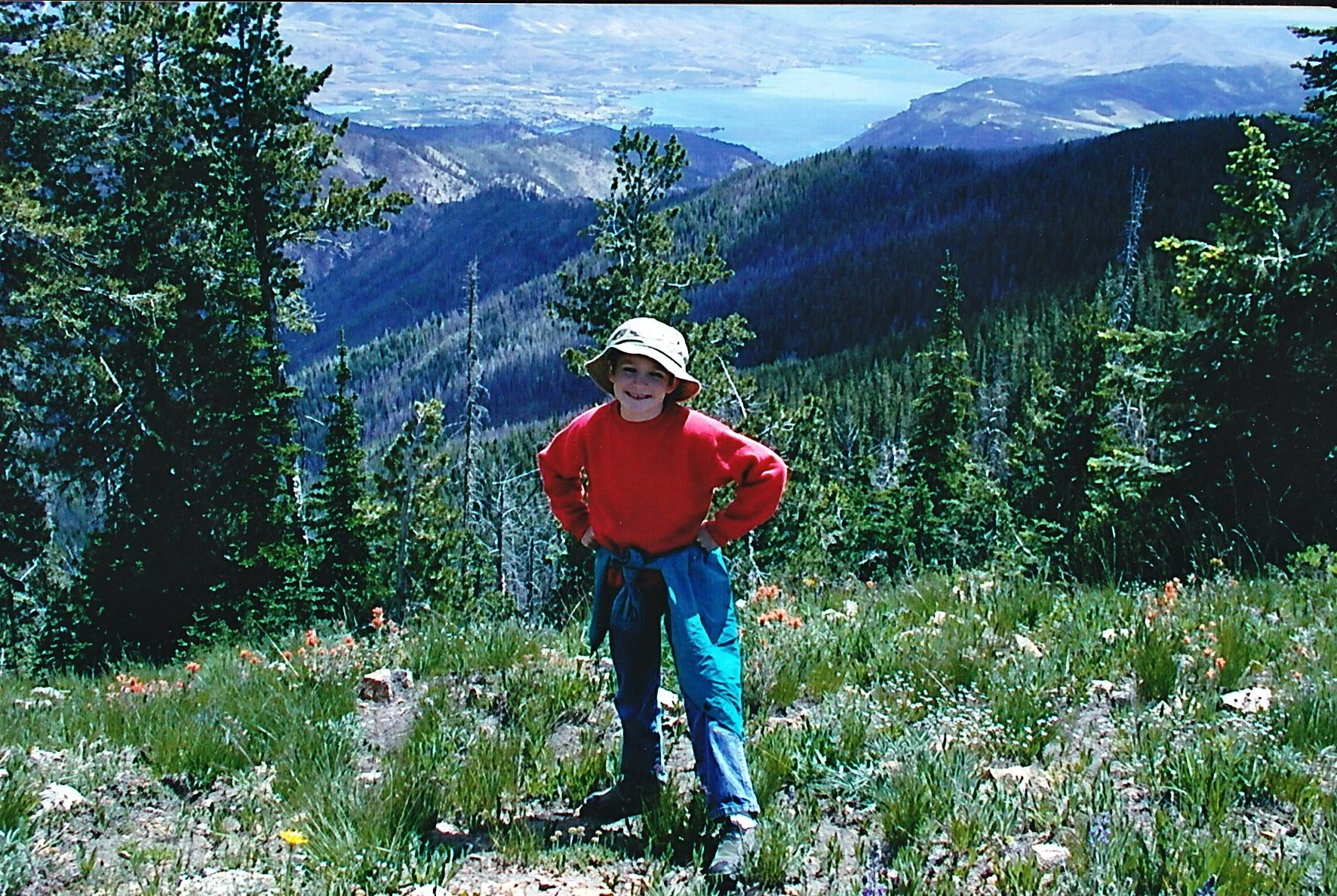
I am not a runner
I was never a distance runner as a kid. In elementary school, I always dreaded the twice-yearly 1-mile run – the fire in my lungs, the need to pace myself, the competition of seeing some of my more athletic peers finishing in 6 or 7 minutes. How could 8.5 minutes feel so long? While I loved to sprint in a game of capture the flag or when racing my friends across the field, I didn’t understand how anyone would be able to, let alone want to, run for many minutes at a time.
Cut to my tweens/early teens and I started accompanying my parents at the local gym once or twice a week. I had no inherent desire to work out, I was just doing what I was told to do and found experimenting with the various machines to be amusing. While the Stairmaster was my favorite, I would sometimes use the treadmill, attempting to hold a slow running pace for up to 30 minutes. Once again, these minutes felt disproportionally long, and as I grew more independent, I stopped going to the gym and did not miss running one bit.
Aside from a few months on the JV tennis team, I didn’t run at all in my last few years of high school. In my first year of university, I dabbled with the 5k distance on the treadmill for a few months, with the only motivation being to try and maintain a fit figure. Bouts of poor mental health and a fair amount of partying overshadowed any athletic desires during the rest of my university experience. My sedentary lifestyle was helpfully interrupted by performing in some dance-heavy community theatre shows, and a year or two of weekly introductory dance classes. These moments of movement made me feel good, but I did not generalize this interest into an athletic ambition or identity.
Curiosity and Inspiration
One day in 2017, as I was leaving the beach and dreading the motion sickness-inducing hot and bumpy bus ride home, an idea came to me: what would happen if I ran home instead? I didn’t know the distance (it turns out it was around 10k), I just knew it would be long, hot, and completely new territory. I thought to myself, “Ok, I need to make sure to stop and stretch at every major intersection so I don’t get hurt”. With my backpack bouncing, I set off on an unknown adventure. There were no expectations. I was near the bus route so could bail at any time. I didn’t know what ‘pace’ was. All I knew was that I had an impulse and was curious to see what would happen if I followed it.
I made it home, hot and exhausted, but feeling a sense of accomplishment and a rush of endorphins I had never experienced before. I realized there was a whole world out there for me to explore! My city of Vancouver had so much beauty to offer, and I could enjoy so much of it by foot! I felt pained that I had plans to move to Toronto a few months later just as I was realizing how much adventure was awaiting me at home.
The week before moving, I hiked the Howe Sound Crest Trail as a one-night backpacking trip. It was epic, challenging, and inspiring. Even though wildfire smoke obscured the sweeping views, the trail itself and the close-up perspectives of the mountains provided more than sufficient awe. I heard rumors that people ran this trail in one-day…that was a world that was inconceivable but curiously alluring. “Those people are on a different plane of existence! Oh well, no time to dwell, off to Toronto!”
A new city
I moved to Toronto with no work lined up. The impetus for the move was my partner landing his dream job and my interest in switching gears from science to pursue singing full-time. Without steady work and with a new city to explore, I decided to teach myself to run ‘far’. I plotted out routes around the city on Google Maps: 5k, 8k, 10k, 15k! Never thinking about pace, just “can I run farther?”. A wonderful loop with minimal stoplights/busy roads emerged: around 19k, which I rounded-up as ‘close-enough’ to a half marathon. As I set out on this loop for the first time, panic set in halfway through. “How is this possible?” “How am I only here?” “I’m hungry, thirsty, and far from home.” But I had to see it through. I knew it was a mental game at this point. I kept shuffling along at a snail’s pace, arriving home, and feeling wonder at how different of a person I felt compared to when I left just a few hours before. What an adventure that can be had in just 2 hours!
This loop became my training grounds for distance running. Some runs were less painful than others, but I always looked longingly at the Starbucks around 15k in, wishing for a sweet beverage to soothe my exhausted body and mind. I started timing my loops – feeling proud when I would make it under 2 hours. “If I can run this ‘half-marathon’ in 2 hours, that is the pace for a 4-hour marathon! An ambitious but achievable long-term goal!”.
I experimented with extending the loop, up to 25k. But without any concept of needing to fuel during a run, I didn’t understand how it was possible to go farther, even as I became stronger. I was interested in the idea of a marathon, but as I felt completely wiped at 1.5-2 hours no matter what, I wasn’t sure how to make it happen. I figured the best I could do was to just keep trying to make my loop feel easier, extending it when I can.
However, with the onset of my first Ontario winter, severe homesickness for Vancouver, and disappointment at only making a meager income through singing, I stopped running. It still wasn’t part of my identity, just something I did when I had the extra time and energy. More than two years passed in Toronto, with a new science job and more performance opportunities, but I can’t recall running at all.
Hiking trails
As a child, my parents would take me on short hikes in the forests and mountains of the Seattle area. Rain was not a deterrent. I often found these hikes boring, and I would try and pass the time by playing imaginary games with my dad. One of my favorites was imagining the trail as a roller coaster track, building it as we went along. I would send the track down a ravine, or out onto a fallen tree. As I got a little older, I became curious about trails that went beyond where we turned around. “This trail goes 10 times farther than we just hiked?! What could be out there?
As a teenager, I attended a YMCA camp for a couple weeks each summer that included overnight backpacking trips on the Olympic Peninsula. Here we learned hiking, camping, and leadership skills. These were wonderful experiences, giving me memories and abilities for a lifetime. On one 5-day trip, we were unable to do the last few steep miles out to a glacier viewpoint as not all members of the group were up for it. Two years later, I convinced my mom to hike the same trail with me as a 3-night trip, hoping to complete the full trail. While we still didn’t see the glacier, (I became too scared of the thin trail on steep slopes to go all the way), glimpses of stunning views appeared through the fog and I felt elated. A seed of profound curiosity as to what I could feel and learn from being in the mountains had been planted. It would take several years for it to sprout.
Despite the abundant opportunities available in Vancouver, I rarely hiked during my university years. I enjoyed walking around the city, but the mountains felt far away. A couple trips up the Grouse Grind were about all I managed until meeting some new friends toward the end of my degree who encouraged me to join them for the occasional more adventurous trip. An 8+ hour trek up to the Lions reminded me of the excitement and awe that can occur when immersed in these rugged landscapes. As the move to Toronto loomed, I began to realize what I would be losing in my backyard. I arranged an overnight hike of the Howe Sound Crest Trail for my final week in Vancouver, which reinforced the feeling that I was leaving paradise just as I was beginning to appreciate it.
While teaching myself to run longer distances in Toronto, I often fantasized about hiking the Pacific Crest Trail. I spent countless hours researching the logistics, and I secured a permit for a thru-hike in 2018. Unfortunately, singing commitments and a fear of being disconnected from my everyday life for many months scared me off from making it a reality. As a small reconciliation for my disappointment, I solo-hiked 100 miles along the Arizona Trail that spring, where I learned a lot about being in the wilderness alone, spending long days on my feet, and the importance of adventure for my soul. The following year I explored 100 miles in the Grand Canyon, once again having a wealth of highs and lows to draw from. In addition to these bigger treks, I did several one-to-three-night trips nearer to Toronto which scratched my itch for adventure, voluntary discomfort leading to personal growth, and a chance to feel connected to nature.
During these years, my athletic identity was that of an adventurous hiker. When I traveled, I looked for long, epic hikes (both single and multi-day) to see the most nature and have the biggest adventure possible, often much to my partner’s chagrin. However, popular and/or manicured trails did not satisfy my lust for exploration. Finding trails that were thin single-track and free of people limited the options, meant longer travel times, and led to frustration when I didn’t find what I’d hoped for. Additionally, taking a week off-grid for a backpacking adventure was something I only felt comfortable doing once or twice in a season, limiting the frequency in which I could reap the mental and physical benefits of this kind of adventure. And finally, there wasn’t as much satisfaction in doing the same trails I have done before, meaning I would run out of local trails.
Despite this recognition, come the covid shutdowns of 2020, my athletic/adventurous identity was still that of hiker. I had heard of trail running, but it never really crossed my mind as something I would do myself.
The gift of time
Aside from a few hikes, my flat, 1-hour total easy-paced bike commute, and short walks, I was not particularly physically active from 2018-2020. I was working 6-7 days a week, often both my science job and a performance job in the same day, and I didn’t have the motivation to make time for more serious exercise. Suddenly, March 2020 hit, and everything changed. All my singing work was canceled, my lab was shut down, and my social engagements postponed. I had very little to do and was left with too much free time to ponder the state of the world.
An impulse, like the one back in 2017, struck. “Why don’t I go for a run?”. I set off on a 6k loop around a local park. I was quickly disheartened. The kilometers stretched out before me as I contemplated how much harder running felt than it had 2 years ago. The loop felt too long, even at my slow pace. My legs were sore, my breath was painful, and the time crept by. “Am I the same person who was able to run 19k?” However, with nothing else to do, I knew I could work my way back to my former fitness if I was patient and dedicated.
By myself, and with a new friend I had made the year prior, I started running consistently again. I felt grateful at the ability to be outside and feel a sense of peace among the chaos. And how much easier it was to work my way back up to the half-marathon distance than back in 2017! Yes, it still hurt, yes, it still took discipline, yes, the last 5k of every run over 15k was a slog, but I had a new sense of confidence and motivation. Here was an activity that gave me a sense of purpose, that made me feel good about myself, that required me to eat a lot of food (which I love to do), and where I could feel a sense of adventure amidst the concrete jungle of the city. How exciting to discover these benefits when little else felt hopeful.
I had all the time in the world. Even as my lab opened back up, I was the only one physically present, so I had no pressure to be there at specific times. I started running to and from work, 7k each way. Some days, when I was feeling good, I would extend the route home, running through the ravine trails or along the lake. On days I didn’t need to go into work, I also started exploring what it meant to run faster. Previously, I had run everything at an easy pace; I was almost entirely focused on distance. But I wanted to explore how it felt to do a 5k where I ran uncomfortably fast, where fire would build in my lungs and legs. Sometimes it ended in failure and collapsing under a tree as my body gasped for air. But I grew stronger. I set a goal to run 5k in 20 minutes. While I never did achieve this goal while living in Toronto, it inspired a new excitement to explore not only distance, but pace as well.
One evening, I was feeling particularly down and made a snap decision to try to run a full marathon, 42k, the next day. Having never run more than 30k before, I knew it was going to be a slow and painful excursion. I planned an out-and-back route along the lakeshore trail: minimal traffic lights, varied scenery from lake vistas to downtown chaos, and no turns to try and remember. With my pack full of water and snacks, and my mind mostly free from expectations or self-judgement, I embarked with excited anticipation at exploring something new and accomplishing this famous distance. As expected, it was hard, and I was reduced to a grumpy shuffle toward the end. It also took me longer than the 4 hours I had dreamed of back in 2017. But I had crossed a boundary that used to be a far-fetched fantasy. Just because something had felt unachievable in the past, didn’t mean it was now. I was growing.
Coming home
My partner had made a temporary move back to Vancouver in late May 2020 to find a calmer lifestyle during the covid-related societal upheavals. I visited in July and with my re-ignited interest in running, decided to attempt the Howe Sound Crest Trail in one day, the mythical feat that used to seem impossible but now felt like it could be a reality. I had no idea how long it would take me (10 hours? 12 hours?) – but I prepared to spend the day in the mountains with plenty of food and water. I started with a nervous excitement at what the day would bring, and few expectations on my speed or even the amount of discomfort I would experience. About an hour into the adventure, I passed a group of trail runners on the way up Unnecessary Mountain. Doubts filled my head. “Am I starting off way too fast?” “They look so much more experienced than me, it is going to be embarrassing when they pass me later on” “Who do I think I am going faster than this group so early into the trail?”. But instead of letting these thoughts change my behavior, I once again tried to approach the situation with curiosity. “This pace feels good right now; we will see what happens later”. I kept pushing, feeling a burst of energy and excitement when I passed hikers exclaiming how impressed they were at what I was doing. As I crested the final climb above Brunswick Lake, I looked at the time. It was still morning! I was shocked at how fast and relatively smoothly the day had gone! I sent a text to my partner who was going to pick me up: “I will be done several hours earlier than expected”. Elated, I began the long descent. While it certainly dragged out longer than I wanted it to, it was overall a much shorter day than I had expected. I also wasn’t passed by the group I was intimidated by earlier in the day, showing that my doubtful thoughts did not reflect my reality. “Maybe I haven’t been giving myself enough credit”.
Another visit to the west coast in October. This time I wanted to run the Baden-Powell Trail, a 48k route across the North Shore mountains. This would be my first ultra-marathon distance. Taking the first bus of the day in the blackness of a rainy fall morning, I once again set off on an adventure not knowing what was in store for me. I got lost on the first big descent, bushwhacking through cold, wet plants which towered over me. This led to frustration and fear – I worried whether I could say to myself ‘I ran the Baden-Powell’ if I wasn’t on-trail every step of the way. And would the distance even count? I journeyed onward, getting lost several more times in the space of 5k. Frustrated but relieved, I eventually made it back to where the trail was clear, and I continued toward Cleveland Dam. Fear, disguised as anger, returned as I ascended the trail around Grouse. “I don’t remember this much climbing from the elevation profile!” No longer was I approaching my experience through the lens of curiosity. All I wanted was to be able to say to myself that I had run the Baden-Powell, that I had accomplished this goal. I was angry at the trail for being more difficult than I imagined. The rest of the day was a grind. Everything was farther and harder than I wanted it to be. “How can there be so many more kilometers to go?” Stopping at a café near Lynn Canyon, I downed two slices of pumpkin pie in the warm and cozy room. This helped give me the energy I needed to finish the trail, and despite all the anger and desperation, the sense of accomplishment and satisfaction at reaching Deep Cove was great. Aside from some long backpacking days, I had never felt so emotionally raw and depleted. But that same day I already knew: “I can do this better”. It wasn’t the time I cared about. It was my approach, my lack of respect for the trail and distance that I was unsatisfied with. Why had I been cursing a completely voluntary experience that I had been dreaming of? I had a lot to learn.
As the societal disruption of 2020 stretched on well beyond anyone’s expectations, it became clear that me and my partner should, to the best of our abilities and while still maintaining jobs in Toronto, make the move to Vancouver more permanent. Vancouver never stopped feeling like home during the 3.5 years in Toronto. I feel a sense of peace here, it is easier to let down my walls and be soft, emotional, and grateful – values which make me feel like a better and happier person. In December 2020, we officially moved into a beautiful space just blocks from Pacific Spirit Park, a magical forest full of trails.
This is where the final stage in my journey to identifying as a runner took place. In that first winter living back in Vancouver, I set myself a goal to run every trail in Pacific Spirit Park, hoping to get aquatinted with my new back yard. This led to hours studying the map planning runs, and many more hours experiencing the enchantment of running through a cathedral of trees. I never did achieve the goal of running every trail in the park, but that wasn’t the point. In those first few months it gave me the motivation to make running an almost daily activity, and I now knew my way around this beautiful forest without needing a map. There was no longer a question of whether I would run. I was a runner.
